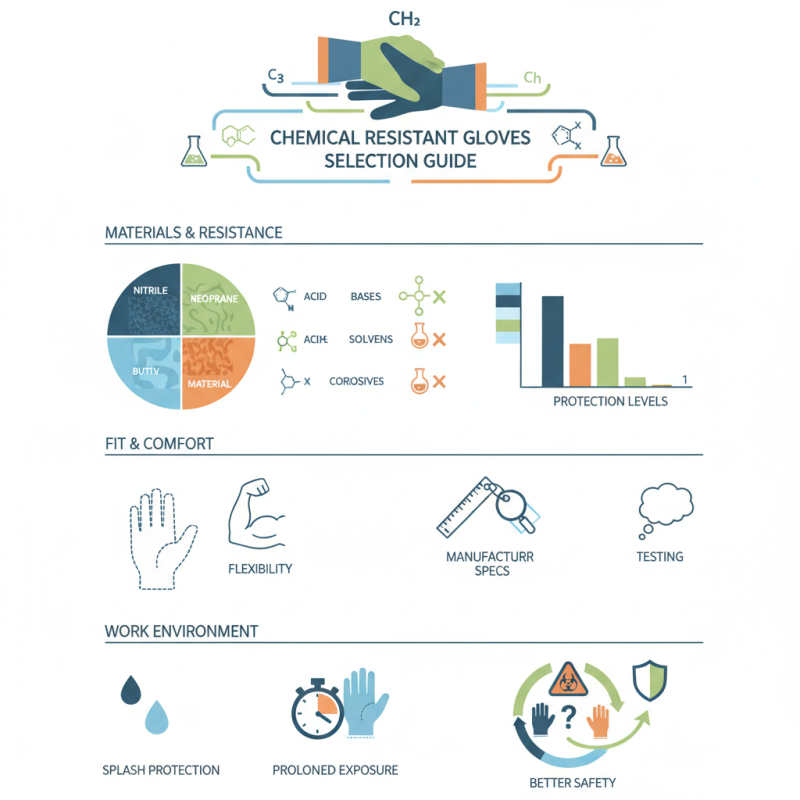
Choosing the right gloves is essential for anyone handling chemicals. Many people overlook how to select chemical-resistant gloves. This can lead to serious injuries and health risks. It’s crucial to understand the materials and their effectiveness against various chemicals.
A well-fitting glove protects your hands from harmful substances. They should be comfortable and offer flexibility. However, not all gloves provide the same level of protection. Some materials might fail under specific conditions, leading to potential exposure. You should always check the manufacturer's specifications.
Testing different types of gloves can also help you find the best option for your needs. Be aware of the environment you are working in. Consider the potential for chemical splashes or prolonged exposure. Reflecting on these factors will lead to better safety practices. Strive for comprehensive understanding when choosing gloves.
Chemical-resistant gloves come in various types, each designed for specific tasks and chemicals. Nitrile gloves are popular for their resistance to oils, greases, and many solvents. They are durable and provide excellent puncture resistance. This makes them ideal for automotive and manufacturing industries. However, they may not be suitable for extensive chemical exposure.
Another option is PVC gloves, which excel against water-based chemicals. They are often preferred in food processing or cleaning applications. Though they provide decent protection, their durability may not match that of nitrile. Users should frequently check for wear and tear to ensure safety.
Neoprene gloves offer versatile protection against both solvents and acids. They are suitable for laboratory work, but should not be used with some oil-based chemicals. Users often find them comfortable, but need to remain cautious of prolonged exposure. Assessing the specific chemicals handled is crucial for selecting the right glove type. Each material has its strengths and weaknesses, and being informed helps in making the right choice.
The chart above illustrates the protection levels of different types of chemical resistant gloves available in the market. Nitrile and Butyl gloves offer the highest level of protection, making them suitable for handling more hazardous chemicals, while latex gloves provide the least protection against many chemicals.
Choosing chemical resistant gloves requires careful consideration. There are several important factors to weigh. One of the most critical aspects is the type of chemicals you'll be handling. Different materials offer varying levels of resistance. It’s essential to match the glove material with the specific chemicals. For instance, nitrile and latex gloves provide different protection levels against various substances.
Another factor is the glove's fit and comfort. Well-fitted gloves enhance dexterity and reduce the risk of spills. If gloves are too loose, they can slip off or get caught in machinery. If they’re too tight, they may tear easily. Testing the gloves before use can help ensure they meet your needs.
Consider the duration of use. Some gloves are designed for short tasks while others are meant for extended wear. Longer exposure may require gloves with better performance. It’s also wise to evaluate the thickness of the gloves. Thicker gloves may provide better protection but can hinder tactile sensitivity. Balancing protection and usability is vital for effective work. Always reflect on your choices and adjust as needed for future tasks.
When selecting chemical resistant gloves, understanding chemical compatibility is crucial. Not all gloves offer the same level of protection against harmful substances. Different materials have varying resistance levels, and workers may be exposed to diverse chemicals. Knowing the compatibility of glove materials with specific chemicals is vital in industries like manufacturing and healthcare.
Performance ratings also play a significant role. These ratings typically indicate how well a glove can withstand certain chemicals. For instance, some gloves may resist acidic solutions effectively, but be ineffective against solvents. Workers must evaluate both the type of chemicals they handle and the glove’s ratings. This makes careful selection imperative to ensure safety and prevent unnecessary exposure.
One common mistake is assuming that all gloves are uniformly effective. This misunderstanding can lead to serious safety concerns. Another overlooked aspect is the importance of proper fit. Ill-fitting gloves may compromise protection. A well-fitted glove allows for better dexterity, ensuring that workers can perform tasks safely. Regular training and updates on chemical properties can enhance knowledge and reduce risks.
When selecting chemical resistant gloves, the importance of proper fit and comfort cannot be overstated. A well-fitted glove provides protection, while a comfortable glove encourages wear. Poorly fitting gloves may lead to inadequate protection, as chemicals can slip through gaps. Furthermore, discomfort can result in reduced concentration and productivity.
To enhance comfort, consider the glove material and design. Materials like nitrile and PVC can offer different levels of flexibility and grip. Choose gloves that allow easy movement. Additionally, ensure that the gloves fit snugly around the wrist to prevent any chemicals from entering.
**Tips**: Always try on gloves before purchase. This way, you can check for any pinch points. A little trial can make a big difference. Also, remember that sizing can vary by manufacturer. Consult size charts to find the best match for your hands. Regularly assess your gloves for wear and tear. Protect your hands for long-term health and safety.
Proper maintenance of chemical-resistant gloves is critical for ensuring maximum protection. A recent industry report highlights that over 30% of glove failures occur due to improper cleaning and storage. To extend the lifespan of these gloves, regular inspection is imperative. Look for any signs of wear or chemical degradation, as even small cracks can compromise safety.
Cleaning is a crucial step in glove maintenance. Use mild soap and warm water to remove contaminants. Avoid harsh chemicals that can damage the glove material. After washing, let the gloves air dry completely. Storing them in a cool, dry place significantly reduces the chances of deterioration. Additionally, it is advisable to keep them out of direct sunlight; UV light can weaken materials over time.
User feedback often emphasizes the importance of following the manufacturer's recommendations. However, not every user adheres to them, leading to confusion. This oversight can result in decreased protection. Training staff on the correct maintenance techniques can reinforce this knowledge. Ultimately, diligent care practices not only extend glove lifespan but ensure safety in hazardous environments.
: There are nitrile, PVC, and neoprene gloves, each for specific tasks and chemicals.
Nitrile gloves are great against oils, greases, and many solvents, ideal for automotive use.
Yes, PVC gloves are preferred in food processing due to their resistance to water-based chemicals.
Always try gloves on before buying. Check for any pinch points and ensure they fit snugly.
Comfortable gloves encourage wear. Discomfort can reduce focus and increase the risk of accidents.
No, neoprene gloves are not suitable for some oil-based chemicals. Use caution with prolonged exposure.
Regularly check for wear and tear. Proper maintenance is crucial for safety and performance.
Assess the specific chemicals you'll handle. Each glove type has strengths and weaknesses.
Yes, sizing can differ. Consult size charts to find the best match for your hands.
Yes, gaps can allow chemicals in. Poor fitting can lead to inadequate protection.
When considering "how to select chemical-resistant gloves," it's essential to understand the various types available in the market, which can include latex, nitrile, and PVC options, each suited for different chemicals and environments. Key factors to consider include the specific chemicals handled, the duration of exposure, and the glove’s performance ratings, which indicate its resistance to various substances.
Additionally, proper fit and comfort are crucial for ensuring safety and effectiveness during use, as ill-fitting gloves can lead to reduced dexterity and increased risk of exposure. Regular maintenance and care also play a role in extending the lifespan of gloves, ensuring they continue to provide optimal protection over time. By following these guidelines, one can effectively select the right chemical-resistant gloves for maximum protection.

Puppelio Glove