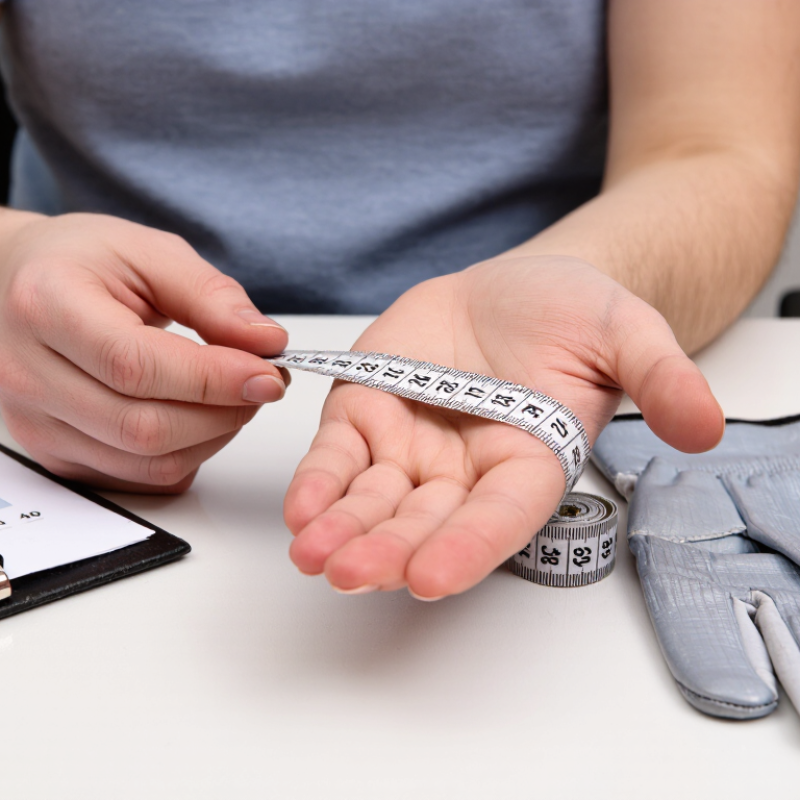
How to choose the right glove size starts with a tape measure, not a guess. Measure around the widest part of your palm, below the knuckles, and compare that number with the manufacturer’s chart. Measure your dominant hand; it may be slightly larger. A glove that bunches at the fingertips can snag or dull your grip. One that pulls across the palm may tire your hand during repetitive work.
Fit is part of protection. The International Organization for Standardization’s ISO 21420:2020 standard sets general requirements for protective gloves, including ergonomic considerations and hand sizing. But a size label is only a starting point: patterns vary by brand, material, and intended task. The U.S. Occupational Safety and Health Administration also advises employers to select gloves suited to the work and to the worker. In practice, try the glove on and test a fist, pinch, and firm grip before relying on it.
Hand ergonomics researcher Dr. David Rempel has studied how hand-intensive work affects comfort and performance. A useful takeaway from that research is simple: glove fit should support the task, not fight it. Treat that as a principle, not a magic formula. Even a careful measurement can miss a stiff cuff, bulky seam, or fingertip that runs long. Small differences matter. This guide explains how to measure your hand, read sizing charts, and check the fit in real working conditions.
Identify the Glove Type and Fit Requirements
Before choosing a size, identify what the gloves need to do. Disposable gloves usually need a close fit for fingertip control, while insulated work gloves may need extra room for a liner. Protective gloves can also have task-specific fit requirements. Check the product’s sizing guidance rather than assuming every glove uses the same measurements.
Measure around the widest part of your palm, just below the knuckles, with your fingers together and your thumb out. Compare that measurement with the size chart, and check hand length if the chart includes it. A good fit feels secure without pinching. You should be able to bend your fingers and grip a small object without the fingertips bunching or pulling tight. A chart is only a starting point. Hand shape varies, and I’ve found that a size can feel different across glove types.
Tips: Try gloves on both hands, since one may be slightly larger. Check the fit with the motion you’ll use most, such as turning a tool handle or picking up a paper clip. If seams press into your fingers or the glove slips at the palm, reassess the size. For safety gloves, follow the fit instructions for the specific task; a comfortable fit alone does not confirm adequate protection.
Match Measurements to the Manufacturer’s Size Chart
Choose glove size by measurement, not by habit. Measure your dominant hand with a flexible tape. Wrap it around the widest part of your palm, excluding the thumb. Then measure from the wrist crease to the tip of your middle finger. Record both numbers in centimeters.
Compare these measurements with the manufacturer’s size chart. Do not assume a medium fits every medium hand. Sizing systems differ, even when labels look familiar. ISO 21420:2020 emphasizes hand circumference and length when assessing glove dimensions. If your circumference suggests large but your finger length suggests medium, inspect the chart’s priority rule. A loose palm can reduce control. Short fingers can create pressure at the fingertips. I still recheck measurements after washing my hands, because cold fingers may measure slightly smaller.
Fit also matters during real work. The UK Health and Safety Executive recorded 604,000 non-fatal workplace injuries in 2023/24. This figure does not prove that poor glove sizing caused those injuries. It does show why practical protection deserves careful attention. Test the glove with the tools you use. Bend your fingers, grip a handle, and check for folded material across the palm. There should be no painful tension. There should be no empty pocket at the fingertips. A chart is useful, but it is not perfect. Hand shape, lining thickness, and repeated movement can change the final decision.
Consider Material, Lining, and Intended Use
How to Choose the Right Glove Size
Consider Material, Lining, and Intended Use
A good glove should fit closely without restricting finger movement. Measure around your dominant hand, excluding the thumb, and check the manufacturer’s size chart. Hand length also matters, especially for gloves with shaped fingers. I measure both hands because they are rarely identical. A half-centimeter difference can change comfort during long tasks.
Material affects how the glove feels after use. Leather often softens and stretches slightly with heat and movement. Knitted fabric may feel flexible, but it can loosen over time. Coated materials usually need a closer fit because excess space can reduce grip. Do not assume a larger size feels safer. Loose fingertips may catch on tools or make precise work harder.
Lining changes the interior volume. A fleece lining adds warmth but can make the same glove feel smaller. Thin synthetic lining usually preserves finger control. For cold conditions, leave enough room to move your fingers, but avoid excessive empty space. For wet work, prioritize grip and drying time over heavy insulation. I once chose a lined pair that felt comfortable indoors, then found my fingers cramped outside. The size chart was correct; my intended use was not. Check the fit while making the movements you actually need, such as bending the palm, pinching, or holding a handle. Even good measurements can miss real-world comfort.
Check the Fit and Adjust the Size if Needed
A size label is only a starting point; glove patterns differ, and materials behave differently. Measure around the widest part of your palm, just below the knuckles, leaving out your thumb. Keep the tape snug, not tight, and compare the number with the maker’s sizing chart. Then try the gloves on if possible. Your fingertips should reach the ends without pressing hard, while the palm should feel secure without pulling across the seams.
Check the fit in motion. Make a fist, spread your fingers, and hold a small object. The glove should move with your hand, not twist or bunch. Too much fingertip space can make precise tasks awkward. Tightness across the knuckles may restrict movement or strain the seams. Notice the cuff, too; it should stay in place without pinching your wrist. Small details matter.
If the fit feels wrong, test the next size rather than assuming the glove will loosen. Some materials give slightly with use; others barely change. That distinction is easy to overlook. A larger pair can also slide, so sizing up is not always the fix. Recheck your palm measurement if both sizes feel off, and consider whether the glove’s shape suits your hand. The right fit feels secure, but not like a second skin pulled too tight.
How to Choose the Right Glove Size - Check the Fit and Adjust the Size if Needed
Measure around the widest part of your dominant hand, across the knuckles and excluding the thumb. Keep the measuring tape comfortably snug, with your fingers together. Compare the measurement with the guide below.
| General Size |
Hand Circumference |
Fit Check |
What to Do if the Fit Is Off |
| XS |
16.5–17.8 cm (6.5–7.0 in) |
Fingers reach close to the glove tips; the palm feels secure without pulling. |
If fingertips press against the ends or movement feels restricted, try the next size up. |
| S |
17.8–19.1 cm (7.0–7.5 in) |
The glove follows the hand’s shape, with no loose folds across the palm. |
If the palm is loose or fabric bunches, try the next size down if it does not restrict movement. |
| M |
19.1–20.3 cm (7.5–8.0 in) |
Fingers bend comfortably, and the material does not pull tightly across the knuckles. |
If bending your fingers feels difficult, try the next size up. If the glove slips, try the next size down. |
| L |
20.3–21.6 cm (8.0–8.5 in) |
The palm stays in place when you open and close your hand; fingertips are not compressed. |
Choose a larger size if the fingers or knuckles feel tight; choose a smaller size if excess material affects grip. |
| XL |
21.6–22.9 cm (8.5–9.0 in) |
The glove feels secure without numbness, pressure points, or noticeable gaps at the fingertips. |
If the glove feels restrictive, move up a size. If it rotates or bunches, try a smaller size. |
| XXL |
22.9–24.1 cm (9.0–9.5 in) |
The hand can make a relaxed fist, with the palm and fingers remaining comfortably covered. |
If a larger size is unavailable, check whether another glove cut or style accommodates your hand shape. |
Sizing can vary by glove style and material. If your measurement falls between sizes, use the fit and intended task as a guide: choose the larger size for comfort or layering, and the smaller size only when it remains comfortable and provides the control you need. A well-fitting glove should not restrict circulation or movement.
Conclusion
How to choose the right glove size starts with understanding the glove’s purpose and the fit it requires. Gloves for precise tasks may need a closer fit, while those used for warmth or heavier work may need a little more room. Measure your hand’s length from the tip of the middle finger to the base of the palm, then measure around the widest part of your hand, excluding the thumb. Compare both measurements with the manufacturer’s size chart, since sizing can vary between gloves.
Also consider how the material and lining may affect the fit. Thick linings can make gloves feel tighter, while some materials may stretch with use. Once you have selected a size, try the gloves on and check that your fingers reach comfortably into the tips, your palm feels secure, and you can move your hand without restriction. If the fit is too tight or loose, adjust the size as needed.

 Puppelio Glove